BPC-157
Body Protection Compound-157
BPC-157 is one of the most powerful peptides for tissue repair, protection, and regeneration. Versatile and very well tolerated, it acts on many systems for fast, lasting results.
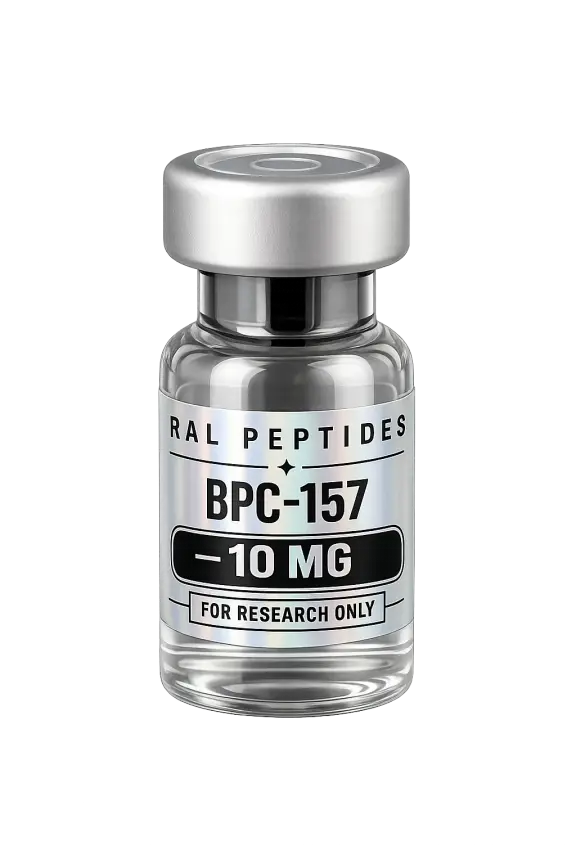
Chemical identity
- Sequence
- GEPPPGKPADDAGLV
- Molecular formula
- C62H98N16O22
- Molecular weight
- 1419.55 g/mol
- CAS no.
- 137525-51-0
Purity (HPLC) measures the absence of related impurities; it is distinct from net peptide content, since salts and counter-ions (acetate, TFA) count toward the vial mass. Account for this when computing the real concentration at reconstitution.
Potential benefits
Repairs tissue
Speeds up healing of tendons, ligaments, and muscles.
Anti-inflammatory
Reduces inflammation and pain.
Regeneration & healing
Promotes tissue regeneration and wound healing.
Gastric protection
Protects and heals the gastric and intestinal lining.
Joint mobility
Improves joint mobility and flexibility.
Post-surgical recovery
Supports recovery and injury prevention.
Mechanism of action
- Angiogenesis: stimulates the formation of new blood vessels for better tissue vascularization.
- Cytoprotection: protects cells from oxidative and chemical damage and mechanical injury.
- Tissue regeneration: speeds up repair of tendons, ligaments, muscles, bone, skin, and mucous membranes.
- Anti-inflammatory: reduces inflammation by modulating cytokines and NF-kB activity.
- Neuroprotection: supports nerve regeneration and protects neurons.
Historical milestones
Research milestones, clinical trials and regulatory steps.
- 1993
First scientific description
Predrag Sikirić's team at the University of Zagreb isolates and describes the pentadecapeptide BPC-157, a fragment of a protective protein found in gastric juice.
- 2000s
Expansion to tissue repair
Preclinical work broadens interest in BPC-157 from digestive ulcers to healing of tendons, muscles, bone and the nervous system.
- 2010s
Spread and investigational status
The peptide gains visibility in research and athletic use while remaining an unapproved compound with no large published human clinical trial.
- 2023
FDA category 2 listing
The FDA places BPC-157 on the category 2 bulk-substances list (section 503A), deeming it a safety risk and ineligible for pharmacy compounding.
- 2026
Removal from category 2
In April 2026 the FDA removes BPC-157 from the category 2 list without approving it, with an advisory committee set to re-review it in July 2026.
Evolution over time
Reduced inflammation and pain. Improved blood circulation.
Onset of tissue repair. Improved mobility.
Visible tissue regeneration. Significant reduction in symptoms.
Advanced functional recovery. Strengthening of repaired tissue.
Optimal, lasting results. Prevention of recurrence and improved resilience.
Dosages & protocol
Reference dosages
8 wk + 4 off
1 to 2 injections per day depending on the goal; maintenance 2 to 5 injections per week
Short plasma half-life (minutes, under ~30 min in animal models), but tissue effects persist well beyond clearance.
What is BPC-157?
BPC-157 is a stable 15-amino-acid peptide, naturally present in human gastric juice and involved in tissue healing and protection processes.
- Name: Body Protection Compound 157
- Sequence: GEPPPGKPADDAGLV (15 amino acids)
- Origin: human gastric juice (succus)
- Molecular weight: 1419.47 Da
- Form: lyophilized, excellent water solubility
Areas and targets of action
BPC-157 acts wherever the body needs repair.
- Musculoskeletal system: tendons, ligaments, muscles, bones, and cartilage (shoulders, elbows, wrists, knees, ankles).
- Digestive system: protection and healing of the gastric and intestinal lining.
- Nervous system: regeneration of peripheral nerves and neuroprotection.
- Skin & connective tissue: healing of wounds, burns, and skin lesions.
- Cardiovascular system: vessel protection and improved circulation.
- Overall recovery: reduces recovery time and improves resilience.
Research protocol rationale
- Acute repair: protocols describe closely spaced exposures over 4 to 8 weeks.
- Chronic regeneration: longer protocols (8 to 12 weeks or more) for tendinopathies and chronic pain.
- Post-surgical context: protocols described over 4 to 12 weeks.
- Digestive models: protocols over 4 to 12 weeks, often under fasting conditions in the literature.
Optimizing results
- Anti-inflammatory nutrition rich in antioxidants, omega-3s, and quality protein.
- Optimal hydration (at least 2 – 3 L/day) to support healing processes.
- Deep sleep and rest, essential for tissue regeneration.
- Stress management: chronic stress can slow recovery.
- Mobility & rehabilitation suited to the injury; limit alcohol, tobacco, and sugar.
Usage tips
- Protocols describe starting at the lowest effective dose, adjusted according to individual response.
- Protocols describe rotating injection sites to limit local irritation.
- The literature associates an anti-inflammatory diet, good hydration (2 – 3 L of water/day), and quality sleep with better results.
- Tissue regeneration is described as a gradual process requiring consistency and duration.
- Particular caution is described in cases of pregnancy, breastfeeding, or a pre-existing medical condition.
Good to know / effects to watch
- Very well tolerated; no serious side effects reported to date.
- Redness or mild irritation at the injection site.
- Mild headaches.
- Transient fatigue at the start of the protocol (rare).
- Non-hormonal and non-doping.
Storage
- Before reconstitution: lyophilized powder stable for months at room temperature; longer storage refrigerated (2-8 °C) or frozen (-20 °C), away from light.
- After reconstitution: keep refrigerated (2-8 °C), protected from light; use within ~28 days.
- Avoid freeze-thaw cycles; store at the back of the fridge, not the door.
Contraindications
- Pregnancy and breastfeeding (insufficient safety data).
- History of or active cancer: caution, angiogenesis stimulation is unevaluated in this context.
- Known hypersensitivity to the peptide or an excipient.
- Non-approved compound (research use): not a substitute for medical treatment or advice.
Possible synergistic combinations
The catalog peptides are clickable — to complete or optimize your protocol.
Exceptional synergy for repairing tendons, ligaments, and muscles and for overall recovery; ideal for severe injuries and post-surgical support.
View the sheet & add →Promotes regeneration, tissue growth, and hormonal recovery; ideal for athletes, recomposition, and anti-aging.
Supports collagen synthesis and improves the quality of skin, tendons, and ligaments.
Omega-3, Curcumin, Magnesium, Zinc, MSM, Vitamin D3, Probiotics.
Sources & references
Links to external sources (scientific databases, trial registries, authorities). RAL Peptides is not responsible for their content.
Featured in these stacks
⚠ For research use only. NOT intended for use on humans or animals. The values shown are indicative and for informational purposes ; each person reacts differently. This guide does not replace medical advice — consult a healthcare professional if in doubt.