GHK-Cu
Glycyl-L-Histidyl-L-Lysine Copper
GHK-Cu (Glycyl-L-Histidyl-L-Lysine Copper) is a peptide naturally present in the human body, discovered in plasma, urine, and saliva. It is a signaling peptide that, by binding to copper, activates essential biological processes: tissue repair and regeneration, stimulation of collagen and elastin, improved skin quality, support for hair growth, and reduced inflammation. It is a versatile peptide with profound effects on skin, hair, and overall recovery.
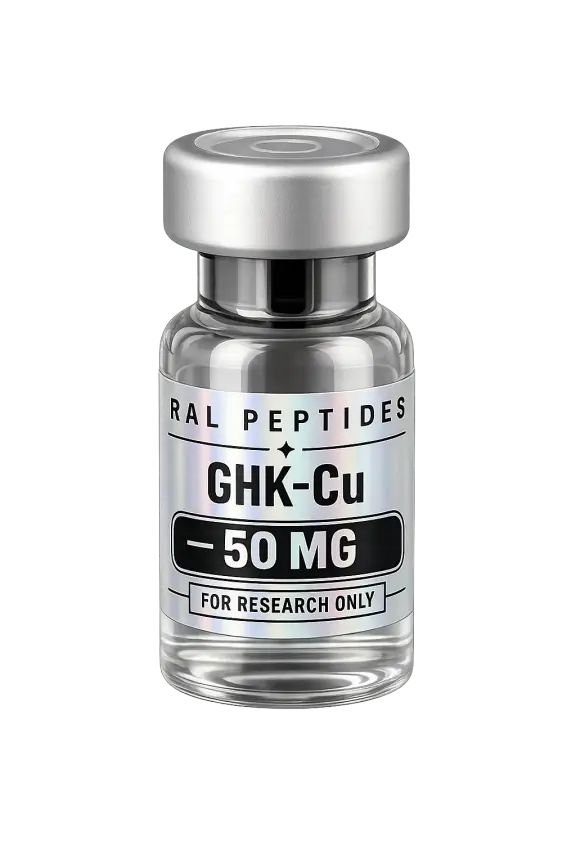
Chemical identity
- Sequence
- GHK (Gly-His-Lys, complexe cuivre)
- Molecular formula
- C14H22CuN6O4
- Molecular weight
- 401.91 g/mol
- CAS no.
- 89030-95-5
Purity (HPLC) measures the absence of related impurities; it is distinct from net peptide content, since salts and counter-ions (acetate, TFA) count toward the vial mass. Account for this when computing the real concentration at reconstitution.
Potential benefits
Repair
Supports tissue repair and wound healing.
Regenerate
Stimulates cell renewal and collagen production.
Optimize
Improves tissue quality for lasting results.
Skin
Improves skin elasticity, texture, and radiance.
Hair
Supports density, growth, and scalp health.
Recovery
Speeds up recovery and strengthens tissue resilience.
Mechanism of action
- Signaling: GHK-Cu binds to copper and enters cells.
- Activation: it activates genes involved in repair and regeneration.
- Stimulation: increases the production of collagen, elastin, and hyaluronic acid.
- Repair: improves skin structure and speeds up tissue repair.
- Protection: reduces inflammation and oxidative stress, and strengthens the skin barrier.
- Stimulates the production of growth factors.
- Promotes angiogenesis and microcirculation.
- Strengthens local tissue immunity.
Historical milestones
Research milestones, clinical trials and regulatory steps.
- 1973
GHK discovered by Pickart
Loren Pickart isolates the tripeptide glycyl-L-histidyl-L-lysine (GHK) from human plasma while studying tissue-regeneration factors.
- 1980s
Copper complex formation
GHK's strong affinity for copper is established, forming the GHK-Cu complex that accelerates wound healing.
- 1990s
Matrix stimulation and skincare
Studies show GHK-Cu stimulates collagen and glycosaminoglycan synthesis, opening its use in skin care.
- 2000s
Gene-expression modulation
Research examines GHK-Cu's action on the expression of genes linked to tissue repair, inflammation and antioxidant defense.
- 2012
Review publications
Pickart publishes reviews consolidating GHK-Cu's effects on oxidative stress, aging and tissue repair.
Evolution over time
Improved hydration, softer skin, visible radiance.
Smoother texture, reduced redness, refined skin grain.
Improved firmness, fine lines less visible, increased elasticity.
Overall improvement, denser and more resilient skin, visible anti-aging effects.
Soothed scalp, less itching, better hydration.
Reduced hair loss, stronger hair, visible fine regrowth.
Improved density, thicker hair, better coverage.
Visible results, optimized growth, healthier hair.
Dosages & protocol
Reference dosages
4 wk + 4 off
Daily use recommended
Very short plasma half-life (on the order of minutes); acts as a transient signal, with regenerative effects building up gradually in tissues.
What is GHK-Cu?
GHK-Cu is a signaling peptide naturally present in the body that binds to copper to activate tissue repair and regeneration processes. It amplifies efforts without replacing them.
- Origin: a natural human peptide (plasma, urine, saliva), complexed with copper.
- Main function: signaling for tissue repair, remodeling, and regeneration.
- Relevant to men and women, at any age (skin, hair, recovery).
- It is neither a steroid nor a product with immediate or miracle effects.
- It is not a substitute for a healthy lifestyle.
Areas and targets of action
GHK-Cu acts on several tissues, from skin appearance to overall recovery.
- Skin: stimulates collagen and elastin, refines skin grain, hydrates, and strengthens the skin barrier.
- Anti-aging: improves firmness and elasticity, reduces redness and fine lines.
- Hair & scalp: prolongs the anagen phase, strengthens follicles, improves microcirculation.
- Tissue regeneration: supports wound healing, remodeling, and extracellular matrix integrity.
- Recovery & resilience: supports tendons, ligaments, and the return to balance after exertion.
- GHK-Cu does not mask damage: it is a biological accelerator of repair.
Logic of research protocols
- Gradual approach: start with a low dose to assess tolerance, then optimize.
- Usual dose described: 2 mg per day, daily use (7 days/week).
- Cycling to manage copper load: ~4 weeks of use followed by ~4 weeks off.
- Routes described: subcutaneous, intradermal, or topical depending on the formulation.
- Regularity and consistency matter most: regeneration is a gradual process.
Optimizing results
The effects of GHK-Cu are described as optimized by a holistic approach.
- Daily skin hydration and sun protection (SPF 30+).
- Gentle, consistent routine, without poorly suited harsh actives.
- Support from within: water, restorative sleep, stress management, nutrition.
- Adequate intake of protein and cofactors (zinc, iron, copper, selenium, B vitamins).
- For hair: scalp microneedling improves absorption.
Usage tips
- Daily skin hydration.
- Use SPF 30+ sunscreen every day.
- Pair with a gentle, consistent routine.
- Support skin from within (water, sleep, nutrition).
- Be consistent: regeneration is a gradual process.
- Gradual approach: start with a low dose and increase it progressively to assess tolerance (weeks 1-2), adaptation (weeks 3-6), optimization (weeks 6+).
- Take the vial out of the refrigerator 10 minutes before use.
- Use a new sterile syringe for each injection and inject slowly.
- Store in the refrigerator between 2°C and 8°C, away from direct light; stable for up to 50 days after reconstitution.
- For hair: scalp microneedling (improves absorption), adequate intake of protein and amino acids, zinc, iron, copper, selenium, and B vitamins.
Good to know / effects to watch
- Risk of irritation with an excessively high dose or application on sensitive skin.
- Possible reactions at injection sites; rotate injection areas.
- Combining with harsh actives without adjustment may irritate the skin.
Storage
- Before reconstitution / sealed vial: lyophilized powder frozen (-20 °C) or refrigerated, away from light (copper is photosensitive).
- After reconstitution (injectable): refrigerate at 2-8 °C, away from light; use within ~28 days (copper oxidizes faster than most peptides).
- Topical serum: keep cool and away from light; unopened product often stable 12-18 months, use within 6-12 months of opening.
- Avoid heat, direct light and freeze-thaw cycles.
Contraindications
- Active skin infection or infected wound at the application/injection site.
- Copper metabolism disorders (e.g. Wilson's disease) or known copper allergy.
- Pregnancy and breastfeeding for injectable uses (insufficient data).
- Avoid simultaneous use with low-pH actives (acidic vitamin C, AHA/BHA), which break the copper bond.
- Very sensitive skin: start at a low dose; risk of transient irritation/redness.
Possible synergistic combinations
GHK-Cu is more effective when combined with suitable physical activity.
Restorative sleep and stress management amplify regeneration.
Adequate intake of protein and amino acids (keratin) to support repair.
Promotes the return to tissue balance and supports performance.
Cofactors that enhance hair results.
Sources & references
Links to external sources (scientific databases, trial registries, authorities). RAL Peptides is not responsible for their content.
Featured in these stacks
⚠ For research use only. NOT intended for use on humans or animals. The values shown are indicative and for informational purposes ; each person reacts differently. This guide does not replace medical advice — consult a healthcare professional if in doubt.