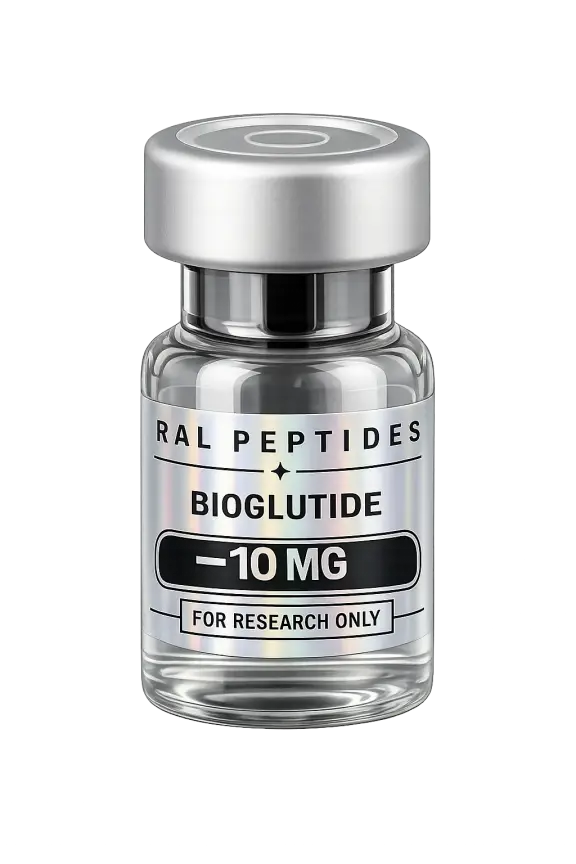
Bioglutide
NA-931 — multi-agoniste étudié sur la voie GLP-1
Bioglutide (NA-931) is a research compound belonging to the family of GLP-1 receptor agonists, the intestinal hormone (incretin) involved in regulating appetite and blood sugar. It is described in the research literature as a multi-agonist targeting several metabolic receptors. This profile approaches it as a GLP-1 pathway analogue: satiety mechanisms, gradual dose titration, and digestive tolerance to be managed. The data remain preliminary and strictly for research purposes.
Potential benefits
Appetite studied
Studied for its action on satiety centers, with a possible reduction in the sensation of hunger.
Blood sugar
Like GLP-1 agonists, may promote glucose-dependent insulin secretion and curb glucagon.
Prolonged satiety
The slowing of gastric emptying associated with this pathway could lengthen fullness after meals.
Multi-receptor profile
Described as a multi-agonist: beyond GLP-1, several metabolic pathways would be engaged depending on the source.
Oral intake
Described as a once-daily oral agonist, with no injection or reconstitution — a convenient route, to be confirmed depending on the product source.
Body composition
Studied in the context of fat mass reduction, to be paired with a suitable diet and activity level.
Mechanism of action
- Belongs to the class of GLP-1 receptor agonists and would mimic the action of the endogenous incretin.
- Central: possible modulation of hunger and satiety circuits at the hypothalamic level, reducing spontaneous caloric intake.
- Pancreas: glucose-dependent insulin secretion and glucagon suppression described for this pathway, for more stable blood sugar.
- Digestive: slowing of gastric emptying, prolonging satiety but also explaining the initial digestive effects.
- Multi-agonist profile reported in the research literature: other metabolic receptors may be involved, mechanisms still to be clarified.
Historical milestones
Research milestones, clinical trials and regulatory steps.
- 2024
Oral multi-agonist molecule
Biomed Industries develops NA-931 (Bioglutide), an oral agonist described as targeting several metabolic receptors including GLP-1.
- 2025
Phase 2 results presented
The company presents phase 2 obesity data at conferences (ADA, ENDO, EASD 2025), as reported by the sponsor.
- 2026
Move to phase 3
NA-931 is described as entering phase 3; data remain sponsor-reported and not independently confirmed.
Evolution over time
Adaptation to the starting dose: possible initial effects on appetite, transient digestive effects common.
After the dose increase: potentially more pronounced satiety, tolerance stabilizing.
Higher tiers depending on tolerance: gradual evolution of body composition and hunger management.
Dosages & protocol
Reference dosages
16 wk
Each morning, on an empty stomach, with a little water
Described as long by the sponsor (non-consolidated data); molecule reported as once-daily oral — pharmacokinetic profile not independently published.
Titration protocol
Stay on one step and let natural accumulation work. Progress slowly.
Titration logic
As with GLP-1 agonists, the dose increase happens in tiers of about 4 weeks to let the body adapt and limit nausea. The next tier is only reached once the previous one is well tolerated. The dose values shown are research reference points, not clinical recommendations.
Signs to monitor
- Positive: natural satiety, stable energy, proper digestion, gradual weight evolution.
- To adjust: persistent nausea, significant fatigue, dizziness, total loss of appetite, dehydration.
Usage tips
- Respect the titration: about one month per tier before considering the next dose.
- Take each morning on an empty stomach, about 30 min before the first food or drink.
- Favor light, split meals; avoid fatty dishes that worsen nausea.
- Maintain good hydration and sufficient electrolyte intake (sodium, potassium, magnesium).
- Prioritize sufficient protein intake to preserve lean mass during a deficit.
Good to know / effects to watch
- Nausea (the effect most frequently associated with this class, especially at the start of the protocol or after a dose increase).
- Bloating, constipation or diarrhea, early satiety, belching.
- Headaches, transient fatigue, sometimes dizziness linked to reduced intake.
- Increased digestive discomfort if the dose is not taken on an empty stomach as recommended.
- Most digestive effects tend to subside within a few days to weeks with slow titration.
- Warrants monitoring (consult if severe/persistent): repeated vomiting, intense and prolonged abdominal pain, signs of dehydration.
Storage
- Store at room temperature, dry and away from light and moisture.
- Keep the doses in their original packaging, out of reach of children.
- Respect the expiry date; do not use if appearance or smell is abnormal.
Contraindications
- Pregnancy and breastfeeding: avoid.
- Personal or family history of medullary thyroid carcinoma (MTC) or MEN 2: class caution (GLP-1/GIP pathway).
- History of pancreatitis; severe GI disorders: caution.
- Interactions: hypoglycemia risk with insulin or sulfonylureas.
- Strictly experimental compound (NA-931): sponsor-reported data, not independently confirmed; no validated human use.
Possible synergistic combinations
The catalog peptides are clickable — to complete or optimize your protocol.
Sodium, potassium, magnesium — limit fatigue, cramps, and headaches during the caloric deficit.
Help preserve lean mass when caloric intake decreases.
An amylin analogue sometimes studied in combination with GLP-1 agonists for the satiety effect (research context).
View the sheet & add →Sources & references
Links to external sources (scientific databases, trial registries, authorities). RAL Peptides is not responsible for their content.
⚠ For research use only. NOT intended for use on humans or animals. The values shown are indicative and for informational purposes ; each person reacts differently. This guide does not replace medical advice — consult a healthcare professional if in doubt.